Opening the Literary Architecture

PT
Member No. 1584, Portuguese Writers’ Association

The architecture of emotion, with life’s reins let loose.

Gabriel Ethan Paz does not merely write — he sculpts emotions into words. From Almada to the world, his journey is an atlas of soul and memory, where every country visited becomes verse, story or novel that sets the unspeakable free. His works are not simply read: they breathe, they confess, they redeem.

Coming soon to bookshops

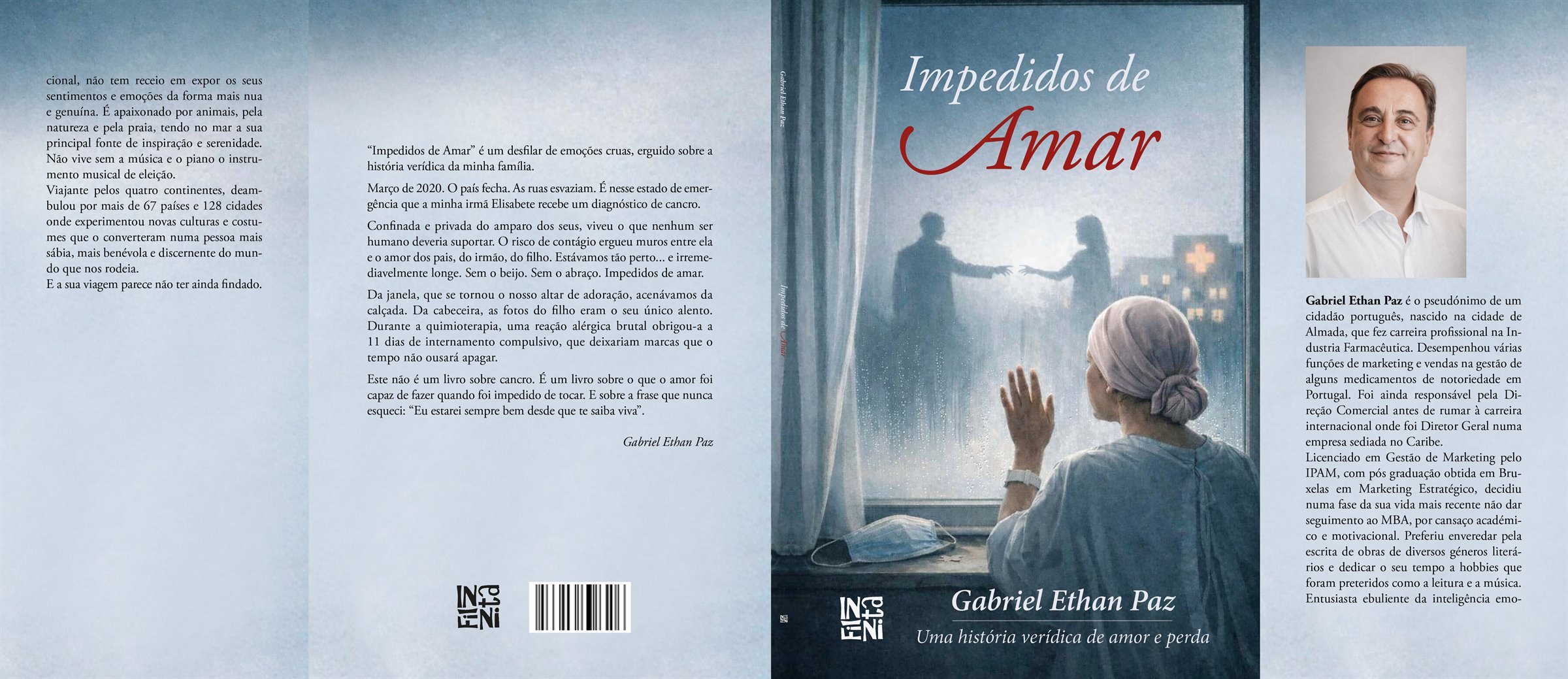
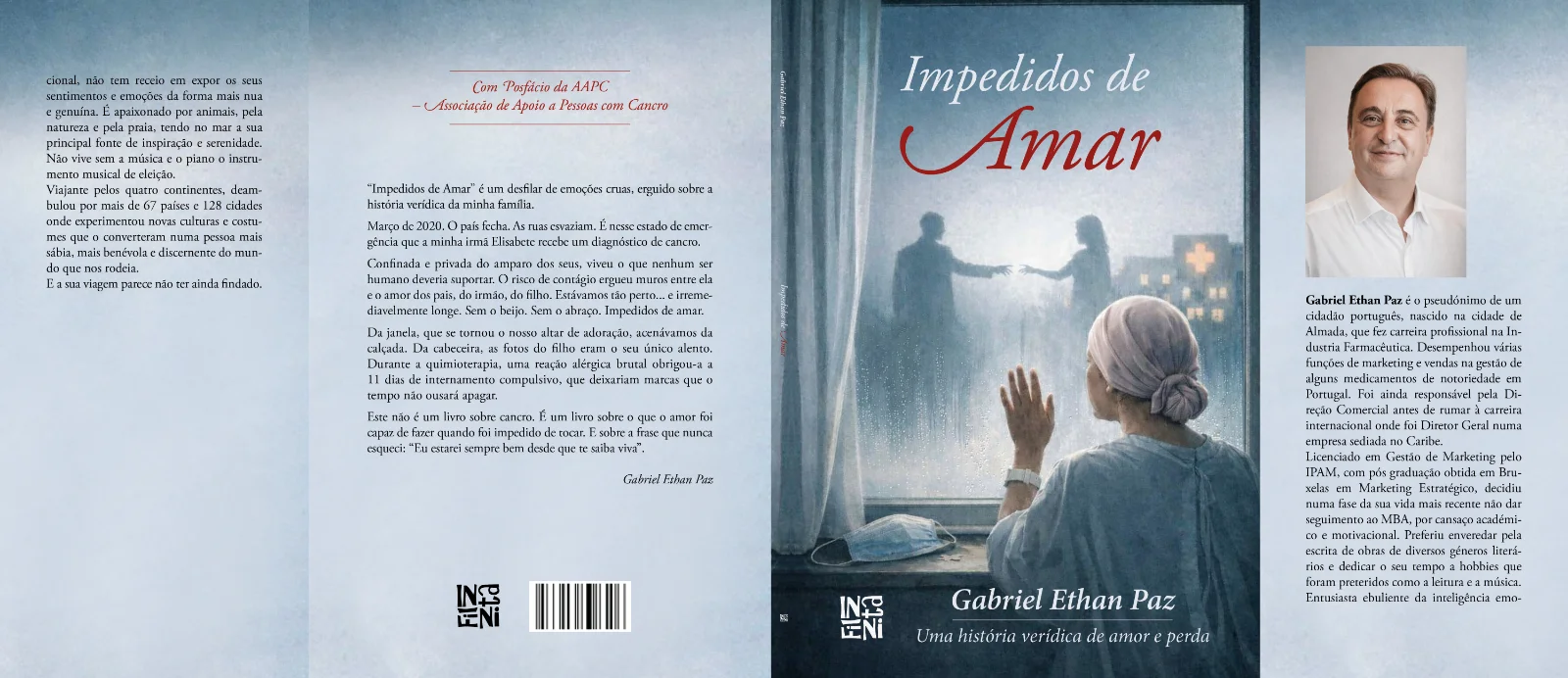
Full cover of the book Impedidos de Amar by Gabriel Ethan Paz
67
Countries Visited
128
Cities Explored
10
Works and Anthologies

About the Author

Words run wild on the page, the mind breathes its way across the world and the senses are handed over to chance. From here spring sentences that seek to enlighten me about purpose. They may soothe or they may wound, but they are pure and impartial. The aim is to set free the power of my silenced voice and of my hidden affections.

Gabriel Ethan Paz is the pen name of a Portuguese citizen, born in Almada, who built a career in the pharmaceutical industry, rising to General Manager of a company based in the Caribbean.

A graduate in Marketing Management from IPAM, with a postgraduate degree in Strategic Marketing in Brussels, he traded the MBA for a notebook to devote himself to writing.

Gabriel Ethan Paz does not write. He sculpts. He turns emotion into words, silence into sentences. His writing is bare, visceral, human. He does not tell stories - he confesses them. He does not invent characters - he breathes them. And redeems them. Every line is a wave from the pavement. Every chapter, a handkerchief he does not keep for himself. From Almada to the world, his work is an atlas of soul and memory, where the unspeakable finally learns to speak.

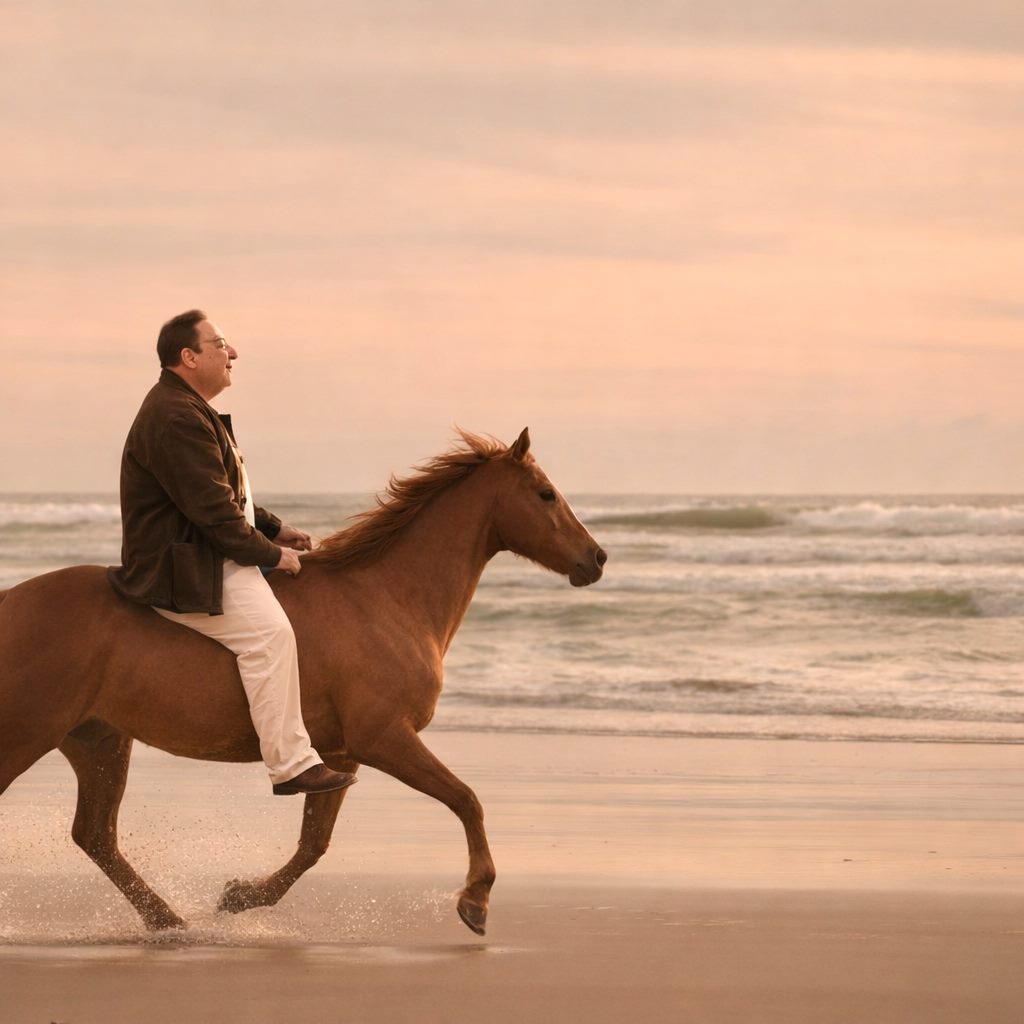
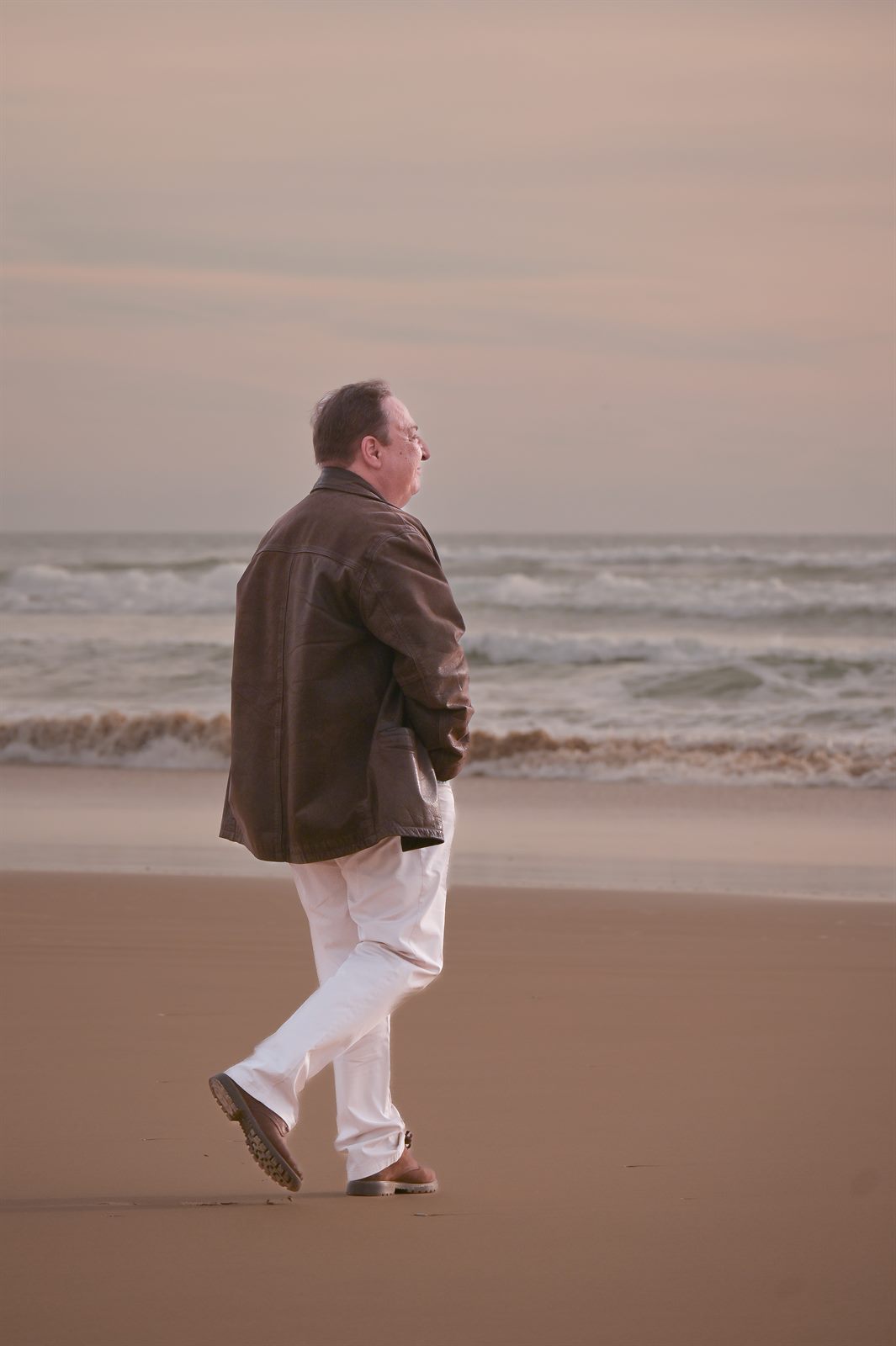
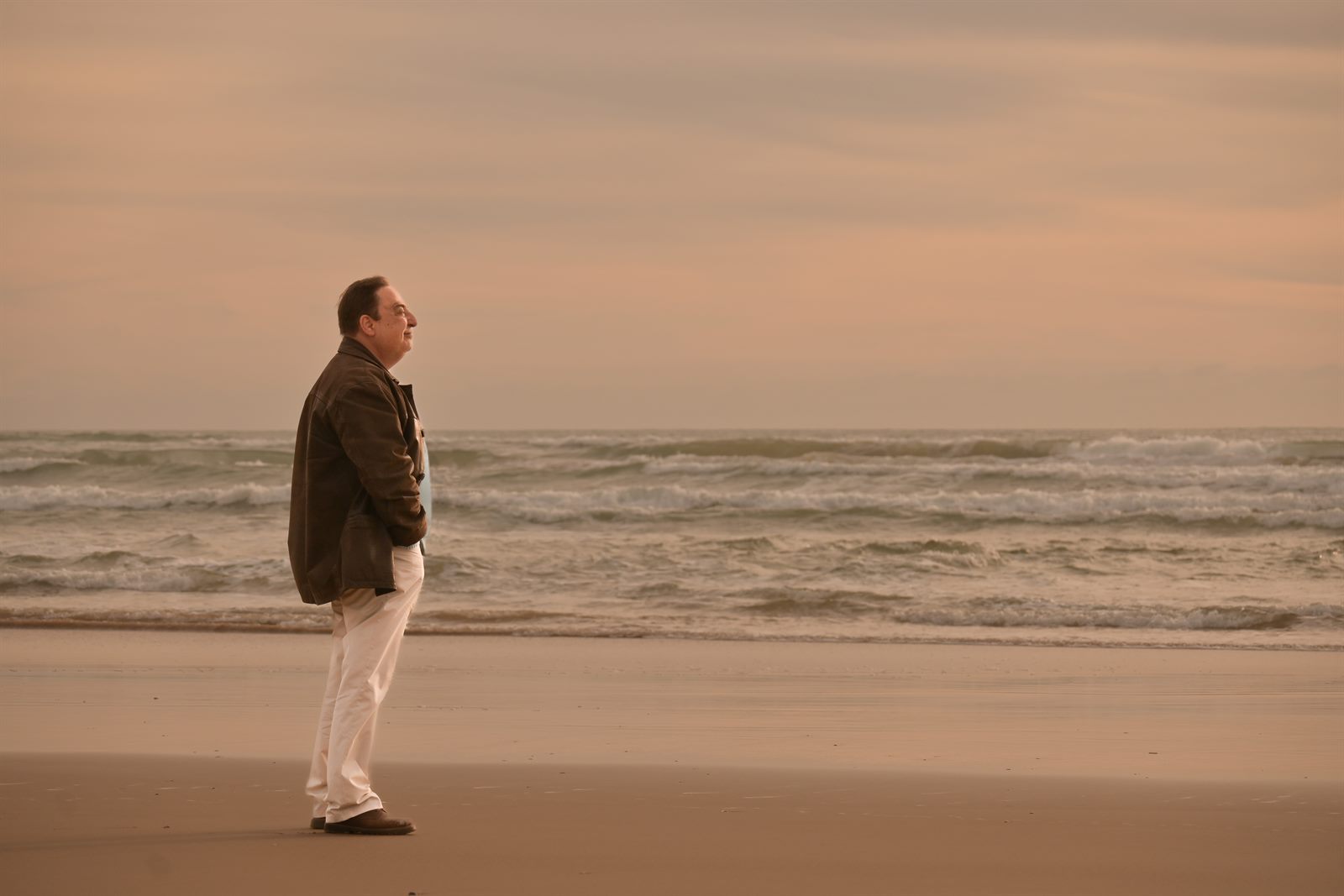
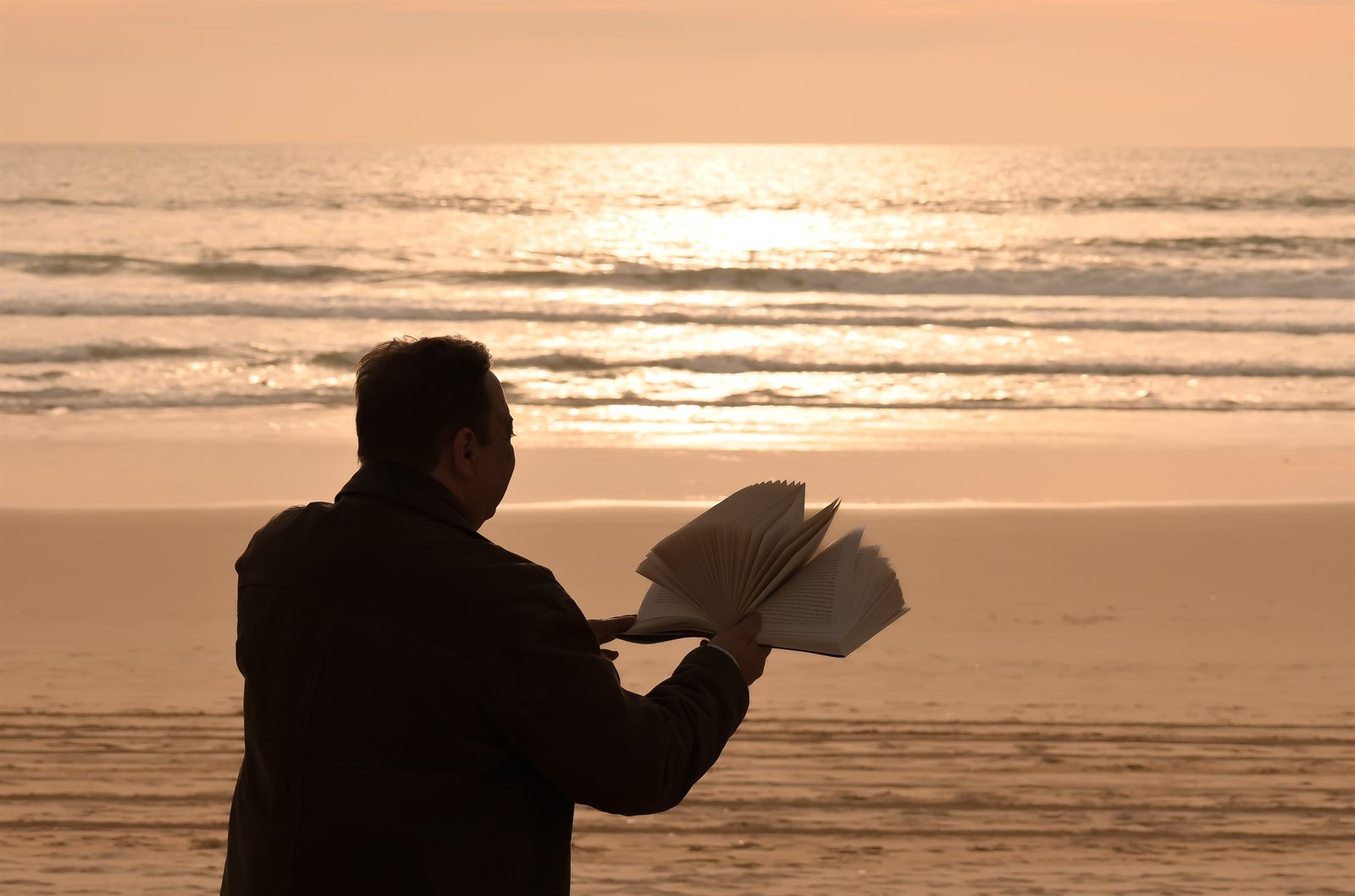
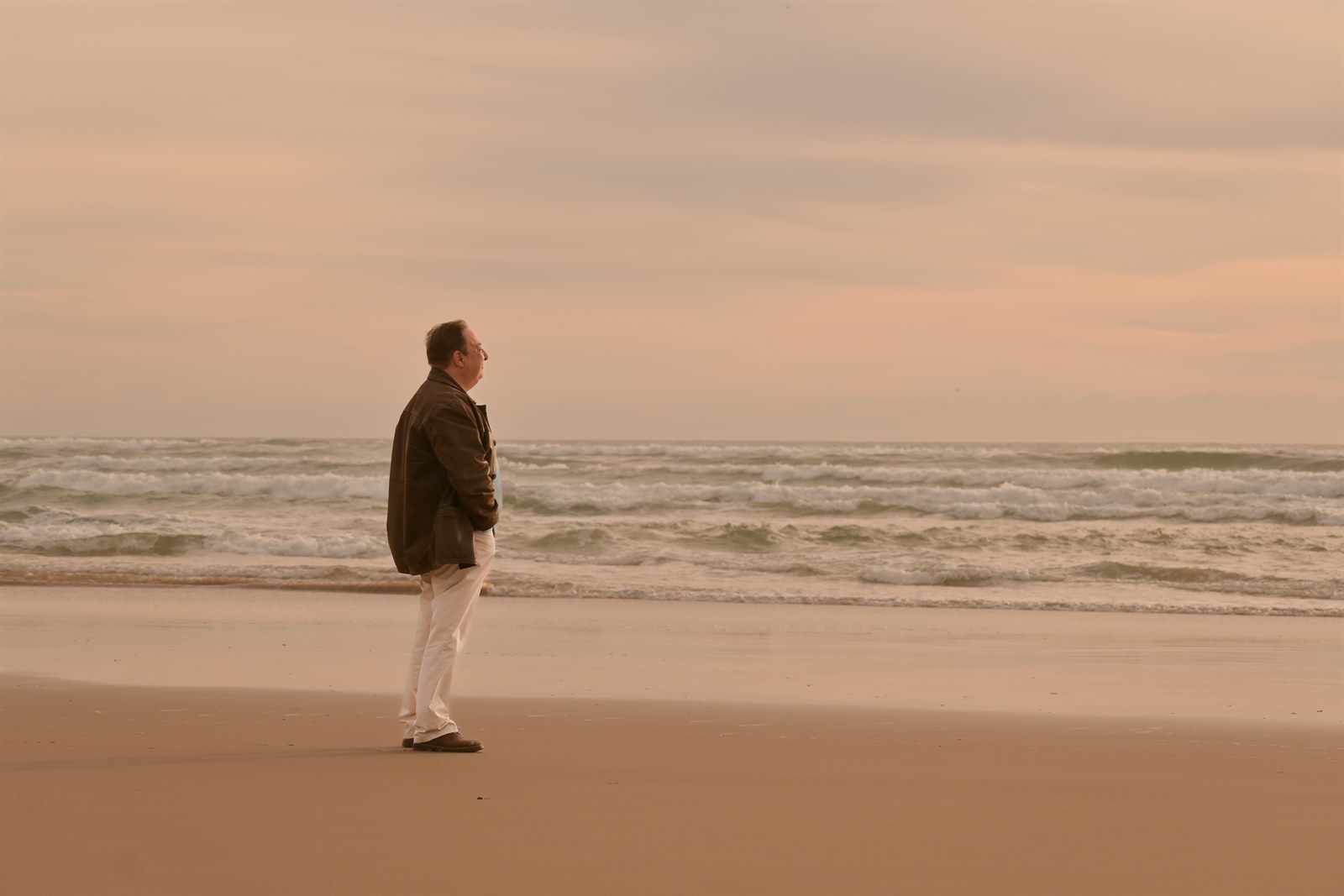
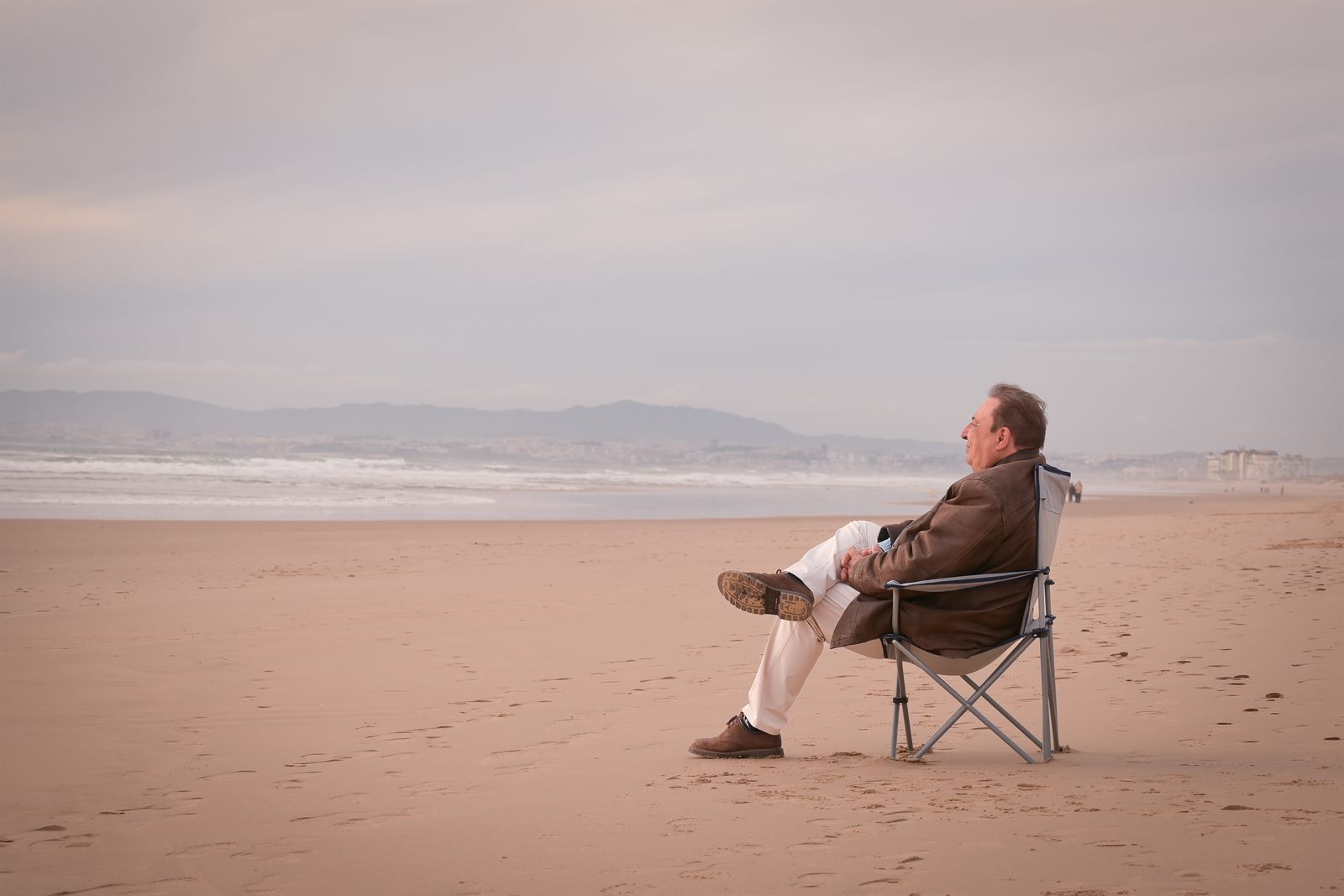
He cultivates emotional intelligence and shows his feelings with sincerity. He loves animals, loves nature, loves the beach - and in the sea he finds his compass, his inspiration and his serenity. The piano, his instrument of choice, is where whatever does not fit into words fits into music.

Novelist, poet and essayist, he shares his voice across several anthologies, in Portugal and abroad. He is a member of the Portuguese Writers’ Association (APE), the Portuguese Poets’ Association and NALAP.

He has wandered across four continents, through more than 67 countries and 128 cities. He has seen worlds, lived cultures, kept people close. Every place made him wiser. Kinder. More discerning. And his journey seems not yet to have ended.

Texts, Reflections and Free Verse.

Dive into my night-time silences, where poetry lays bare the cracks in the human condition.

Cover of the book Impedidos de Amar
Impedidos de Amar

At the beach...

Elisabete’s face shone with joy. She longed to see her beach again and to step away from the hospital routine and a disguised house arrest. So she woke early on the first day and set the whole household in a flurry. She demanded that breakfast be made and that we leave for the beach. She barely ate, so eager was she to feel the fine sand. In the car, all the way there, no one could get a word in, so overwhelming was her lively voice.

She wavered between debating the colour of the beach flag and whether the scenery had changed. As we neared the car park, the gleam in her eyes was plain to see. At last, her beach was there. Right before her eyes, full of emotion.

Disenchantment

The days are mere counters of minutes, queues with no grounded purpose. Jumbled routines in which we subtract leisure and pleasure, and divide duty and need, or deprivation. They are fractions with no unknown, impossible equations. The clocks have stopped and the calendars stay fixed on the same day and the same month. They are ballads for a sad piano, without assonance.

We accept the throbbing of the wind and the transparency of the rain, and we shelter from the sunlight. The dew becomes part of daily life in our neglected garden. Yes, we eat. Whatever is to hand and ready to taste. Cobwebs gather on the recipe books, and on the will to make an effort. The bath is a mere gush of water to soothe the conscience that the body’s grime is slowly washing away.

The book

This book is just that: proof that love withstands time, illness, distance, fate. Proof that a life can be so intense that it goes on beating even after the last breath.

Proof that death does not strip us of everything — because what is true remains.

And so this story ends: not with silence, but with eternity.
Not with an ending, but with memory. Not with loss, but with legacy.

Elisabete lives — in the pages, in the family, in the gestures, in the courage, in the longing. She lives because those who love like this never leave entirely. She lives because those who inspire like this never stop shining. She lives because those who fight like this never stop teaching.

This is the summary. This is the close. This is the curtain falling — but the light that keeps glimmering.

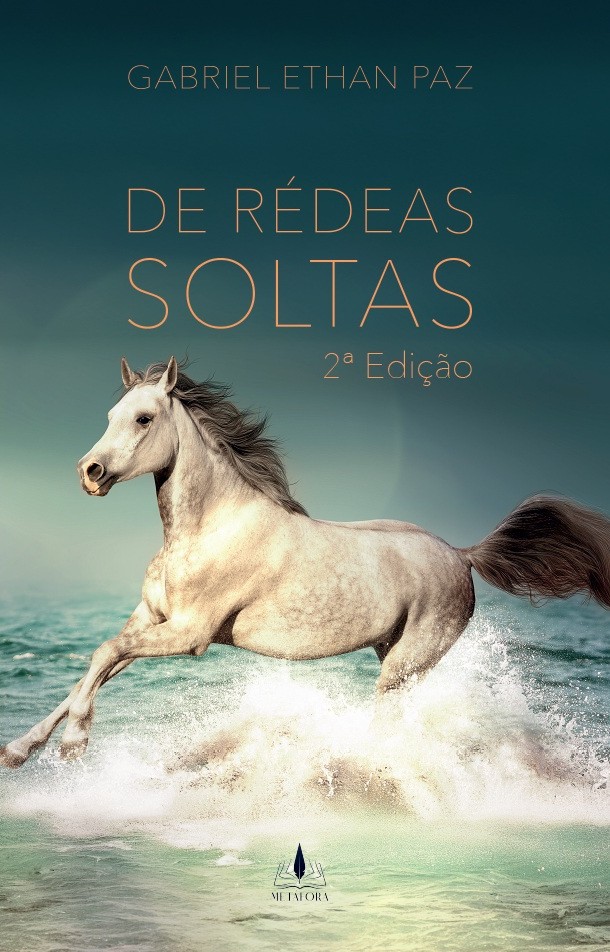
Cover of the book De Rédeas Soltas
De Rédeas Soltas

These Are the Nights

On the eaves of the house a fine rain was throbbing. Like loosened, frightened notes that cannot be heard, that only bewitch the sheet music forgotten in some drawer. Longing embraced the deceitful glass of the nameless liqueur, which lay motionless. From the fireplace an angry flame flooded the living room with warmth, where, on a strategically placed sofa, I rest the weary skeleton of this life of toil. I do not know what I was thinking, nor what I might long for. I was simply drifting through senseless stretches of time. I regretted some unusual paths and sketched a smile at the more coherent decisions.

It is crucial to lose ourselves in time and space, to reflect on the path we have walked and trampled with steps so often taken without reason, without awareness, without thought. A purpose of gruelling self-analysis that helps to correct flights of fancy drawn at random. That changes nothing in the past but questions the future. I need to know whether I did well. I owe myself that commitment. To err is human, but I am not. I am a perfectionist and always seek the finest point beyond borders. I do not know if the sacrifice will be worth it, but it runs in my blood. And it is this weariness that consumes me. That wears down my will and steals my peaceful sleep.

I doubt the uncertainties and question the truths I do not master. I turn the whole scene over and examine every detail in the hope that it will assure me that yes, I acted well. I do not want the approval of humans, so often disguised as traps to ensnare. Of poisoned compliments, or ones bewitched by morbid or restraining desires. I want to embrace peace. I want the comfort of a mind at ease with every gesture, every decision. I drift, I question, and I keep sipping that liqueur I do not know. It tastes of something elusive, but it is sweet. It feeds the thirst for answers. The crackling of the wood invites me to settle into the sofa. I lie down without losing sight of the fire. It warms the room, the soul and the body. In the glass, the liquid can be seen running down the side, recalling the rain that lingers on the eaves.

I call upon everything on these nights. My late father, my sister who dwells with the Most High, or even God in his heavenly kingdom. I do not beg for answers, only for the right discernment. I need that certainty. Yes, I am different. I am not content to be one more frenzied photocopy of so many others lavishly planted in someone’s life. I am a man of virtue and of character. Of freedom and of passion. Of daring and of struggle without hesitation. Of humility and friendship. Of compassion and teaching. I am a man of complex paths and firm ideas. Neither better nor worse. Just me. With all the doubts and certainties that lead me to nights squandered in a setting carved by the need for perfection. Most of the time I find peace without noticing. I sleep, lost at this crossroads of emotions sprinkled with a prudent dose of anxiety. I almost always wake with the answers I seek. As if they had been stealthily pushed along by the breeze of a new day and had settled freely into the numbness of my night’s rest. This is the way. These are the nights. This is me.

Let There Be Light

Let there be light.
In the darkness of your fearless words
Whether honeyed or likewise macabre
In the ambiguity of your doubtful gestures
In the steps with which you sail on, and which are sure
But also in those that force you to retreat
And long for a judgement, fruitful or adverse
In chimeras hidden away and scorned
And in customs like insane crusades
In the outpouring that was cruelly torn apart
And without decree raised up a prostrate soul

Let there be light.
In the muzzling of the feelings you keep silent
And of the fear that renders your speech mute
In the clouded gaze fixed on some uncertain place
In the idling along a path that is deserted
In the stones scattered in an ill-fated direction
That shamelessly cloak you in solitude
And in the reviling of a soul without will
Flooded by an eternal and morbid longing
That turns life into a dismal fable
Where you appear like a decaying puppet

Let there be light.
In the embrace you long for, but which is on the run
Like an impostor whose consent is feigned
And goes on stinging with a merciful sentence
In a world apart that is demented
In that simple love that cannot be found
That, in the winning of fortune, is an affront
And in the child who was never conceived in a womb
Imposed upon by a body that, being ill,
Subdues like a giant a mere dwarf
And breaks life without plausible reason

Let there be light.
Upon the waking of each new day
The listless gaze that keeps watch from the face
On the days that die of sheer inaction
Like a silent anniversary with no chosen song
On the arid meadows, once a restful haven
Plundered by bitterness, without their green
And upon the freshness of the simple act of breathing
So that a new story may then take root
And a seductive smile be carried on the wind
To restore to the soul its blessed breath

Writing for Love

Line upon line of words poured out
They may be wicked, but they are never feigned
Written in outcry by daring authors
Who tell of fears or of simple loves
Stubborn sketches of joy or of melancholy
Living proof of mercy or of sheer tyranny
Line upon line of compassionate words
Silent decrees waiting to be read
Angry roars at an iniquitous community
That flatters the futile and scorns the truth
That hides from tenderness and embraces the immoral
And builds its deadly sin upon deceit
Line upon line of feelings lived
Carried over whole, with no filters for sale
Honest judgements of impartial nobility
Free of greed or of mere privilege
Eloquent cries calling out for reflection
Restless cautions of such fair forewarning
Line upon line of love freely given
In the hope of mending a painful fate
Bursts of courage in bewildered souls
Diligent answers at those crossroads
Distant embraces of secret devotion
When a cherished pen is not always near

Synopses from the Literary Universe.

Published Cover of the book De Rédeas Soltas Poetic Prose and Poetry

De Rédeas Soltas

We live on a tight rein.

Bound to the money we worship like a god, to the golden masks we wear to be accepted, to the likes we beg for like alms, to the loves that cripple us instead of setting us free.

In this book of philosophical poetic prose, Gabriel Ethan Paz rides, without asking permission, through everything that imprisons us: money, social hypocrisy, fear, love left unfulfilled.

And he shows what that prison costs us.

It costs the longing that cannot be explained. The sacrifice of a whole life at sea that no one wants to make any more. The weight of being a father and having to raise children in a world without values. The temptation that circles us, the illusion of love it sells us, the summer loves that stay on the skin and the ended love that leaves its sentence. It costs the sea that is no longer an altar, but a road. The winter that no one respects any more. The swallowed grief, the watchful memories, the time that slips away, the missing embrace, hunger, fatigue, death made banal and war made normal.

Because the values missing from society are not a distant subject — they are the air we breathe. And every text in this book is a portrait of what we breathe today.

From the woods where he takes refuge to the seashore where he finds peace again, from the cruel portrait in “Seres Humanos” (Human Beings) to the indictment in “Pecúnia Venerada” (Worshipped Money), every text is an act of liberation.

I write because I have the freedom to choose the path on which to fight.

And this book is an invitation: let loose your reins too.

In Development Cover of the book Da Simplicidade de um Monte Novel
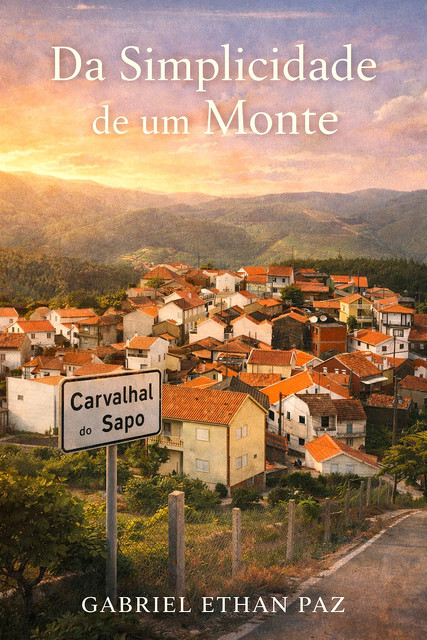
Da Simplicidade de um Monte

Ermelinda and Albano were born in a remote village, Carvalhal, lost in space and time, where knowledge arrived late and life taught early. They grew up amid limitations, hunger and a harsh daily life that shaped their character — she, among the crab beds and the trousseau woven by more than a hundred hands; he, between misery and the dream of being free.

They married by letter, without ever having seen each other, and left for Lisbon. On 10 April 1966, in the Church of Santiago, in Almada, the book of illusion closed: the house shared with in-laws and sisters-in-law, the lack of privacy, the scarcity. They raised two children, seven years apart, and learned to be parents in a flat where nothing was theirs.

The turning point came when Albano went to sea and Ermelinda put on the blue hospital uniform. She, who had never had a salary of her own, multiplied herself in part-time jobs to support the household. With the savings she managed to put aside, she dared to invest in shares that no one in the village knew — while the sudden illnesses of their children and a storm that almost sank Albano’s ship put everything at risk.

The shares rose at a dizzying rate. From poor, they became new rich. They built a luxury house. But wealth did not lift their feet off the ground: they returned to Carvalhal to give back to the village what the village had given them.

Except the village did not want it. When Ermelinda proposed exploiting the water of the Lameira spring and sharing the profit among everyone, the village answered: “We do not want the profit of the water. We want the water.” And the new house they built on the Monte stayed empty — because they could not sleep in it. They slept in the old house, in Ermelinda’s mother’s crooked bed, where life had a smell.

Retired, they finally understood what money could not buy: return was not going back to give. It was going back to belong. Without giving orders. Without helping. Just being there.

“Da Simplicidade de um Monte” is the story of two lives which, born in a place deprived of everything, never accepted that as an impediment to learning, fighting and passing on to their children the noblest values — and which discovered, in the end, that happiness was not in Lisbon, nor in the sea, nor in the shares. It was where it had begun. But it was not for sale. It was waiting.

Pre-launch Cover of the book Impedidos de Amar Elegy, Memoir Novel

Impedidos de Amar

“Impedidos de Amar” is a procession of raw emotions, built on the true story of my family.

March 2020. The country shuts down. The streets empty. It is in that state of emergency that my sister Elisabete receives a cancer diagnosis.

Confined and deprived of the support of her loved ones, she lived through what no human being should have to bear. The risk of contagion raised walls between her and the love of her parents, her brother, her son. We were so close... and hopelessly far. No kiss. No embrace. Prevented from loving.

From the window, which became our altar of adoration, we waved from the pavement. At her bedside, photos of her son were her only comfort. During chemotherapy, a brutal allergic reaction forced her into 11 days of compulsory hospitalisation, which would leave marks that time will not dare to erase.

This is not a book about cancer. It is a book about what love was able to do when it was prevented from touching. And about the sentence I have never forgotten: “I will always be fine as long as I know you are alive.”

In Progress Cover of the book A Última Transgressão Novel
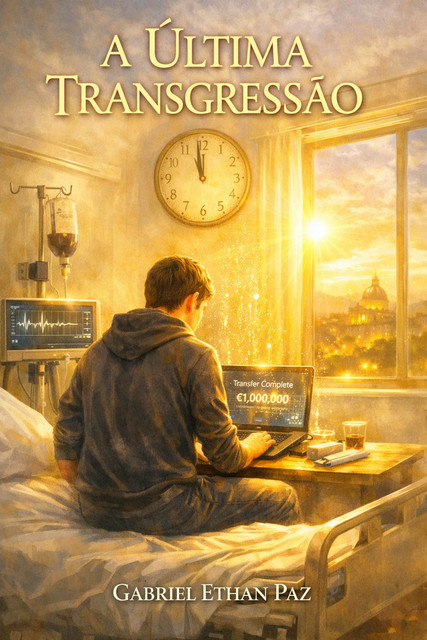
A Última Transgressão

“A Última Transgressão” is born from the inevitable shadow of mortality — that silent presence we all avoid until the day it imposes itself with brutality. When a brilliant young man sees his future shatter under the weight of a terminal illness, an intimate and devastating journey to the limit of human existence begins. Between sterile hospital corridors, emotional isolation and writing that becomes both refuge and cry, he confronts the fragility of life, the injustice of fate and the urgency of leaving a mark before time runs out.

Stripped of the illusions of youth, the protagonist reinvents himself in a territory where morality, despair and freedom intertwine. Illness becomes the catalyst for a fierce rebellion: an unlikely hacker, a digital Robin Hood who, faced with imminent death, decides to subvert systems and redistribute wealth to those the world forgot.

But is that justice? Or is it crime?

For those who received, he was salvation. For those who lost their job because of the attack, he was a criminal. For his parents, he was only a son.

This is not just the story of a cybercrime, nor a medical drama. It is a meditation on identity, finitude and purpose. An exploration of the grey zones where pain becomes creation, where nihilism brushes against altruism, where loneliness turns into disruptive force. In his final act — audacious, controversial and profoundly human — the protagonist leaves a question that echoes beyond his own death, forcing us to rethink what it means to live intensely when the end is no longer an abstraction, but an imminent certainty.

“A Última Transgressão” is an invitation to reflect on mortality, justice and legacy. A story that disturbs, inspires and remains — because it does not tell us what to think. It leaves us to decide: Robin Hood or criminal?
Anthologies and Collaborations

Moving Images

Trailers for the works of Gabriel Ethan Paz.

De Rédeas Soltas trailer
Impedidos de Amar trailer

Official Media Kit

Complete official material for the press, events, interviews and promotion.

Literary Mission

My mission is born in the instant when the soul loses its bearings and leaves me at the mercy of emotions that assail me, wound me or save me. There are moments when everything stops — the world, the body, time — and only my hands carry on, surrendered to an impulse I do not control. That is when the reins come loose and I find myself.

I write because I cannot silence what runs through me. Because words, when they burst out, are truer than any gesture. They run wild on the page, they search for meaning, they search for me. They are my way of breathing when my chest tightens, my way of existing when life weighs heavy, my way of loving when silence is no longer enough.

I write because I do. I write because I need to. I write because, when I surrender to words, I find again the freedom I so often lack. I write out of love — for what I feel, for who I am, for what I am still searching for.

Long Biography

Gabriel Ethan Paz is the pen name of a Portuguese citizen, born in Almada, who built a career in the pharmaceutical industry, rising to General Manager of a company based in the Caribbean.

A graduate in Marketing Management from IPAM, with a postgraduate degree in Strategic Marketing in Brussels, he traded the MBA for a notebook to devote himself to writing.

Gabriel Ethan Paz does not write. He sculpts. He turns emotion into words, silence into sentences. His writing is bare, visceral, human. He does not tell stories - he confesses them. He does not invent characters - he breathes them. And redeems them. Every line is a wave from the pavement. Every chapter, a handkerchief he does not keep for himself. From Almada to the world, his work is an atlas of soul and memory, where the unspeakable finally learns to speak.

He cultivates emotional intelligence and shows his feelings with sincerity. He loves animals, loves nature, loves the beach - and in the sea he finds his compass, his inspiration and his serenity. The piano, his instrument of choice, is where whatever does not fit into words fits into music.

Novelist, poet and essayist, he shares his voice across several anthologies, in Portugal and abroad. He is a member of the Portuguese Writers’ Association (APE), the Portuguese Poets’ Association and NALAP.

He has wandered across four continents, through more than 67 countries and 128 cities. He has seen worlds, lived cultures, kept people close. Every place made him wiser. Kinder. More discerning. And his journey seems not yet to have ended.

His Works (10 in Total)

  • De Rédeas Soltas – 2nd Edition, Metáfora Editora – Poetry and Thought
  • Impedidos de Amar – In-Finita Editorial, Memoir-Novel, Elegy
  • Da Simplicidade de um Monte – Novel
  • A Última Transgressão – Novel
  • Contributions to 6 national and international anthologies (details in the Portfolio).

* Cover images and synopses are available in this site’s portfolio.

Official portrait of Gabriel Ethan Paz

Short Biography

Gabriel Ethan Paz, the pen name of a Portuguese citizen born in Almada, built a career in the pharmaceutical industry, rising to General Manager in the Caribbean.

A Marketing graduate from IPAM with postgraduate studies in Brussels, he traded the MBA for a notebook. He does not write, he sculpts: bare, visceral, human writing.

He does not tell stories - he confesses them. He does not invent characters - he breathes them. And redeems them. Every line a wave from the pavement, every chapter a handkerchief.

Novelist, poet and essayist, member of APE, AP Poetas and NALAP. He has wandered through 67 countries and 128 cities. He has seen worlds, lived cultures, kept people close. His journey has not ended.

Press Highlights

  • Literary events and public presentations
  • Interviews and conversations
  • Press articles and mentions
  • Upcoming appearances
  • Selected quotes

Interviews

Conversations about the author’s writing, works and journey.

Written interview

Interview with Gabriel Ethan Paz, author of Impedidos de Amar

Revista Conexão Literatura

A conversation about the true story behind Impedidos de Amar, the impact of the pandemic on families, writing as a way of setting one’s voice free, and upcoming literary projects.

Read the full interview (in Portuguese)
Audio interviews

Coming soon

Audio interviews, including radio appearances, will be made available here.